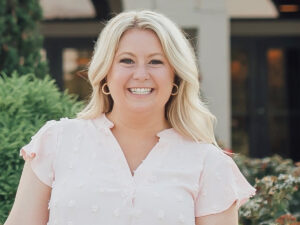

When Lauren Howard started sharing her experiences with burnout and toxic workplaces online, she expected people to be “absolutely mortified” by her personal struggles. Instead, she discovered something profound: she wasn’t alone. Women everywhere reached out, saying they’d been through the same thing and also thought it was just them. That realization became the foundation for LBee Health, a virtual mental health practice that’s tackling one of healthcare’s most frustrating gaps—accessible assessments for adult autism and ADHD.
Howard’s path to founding LBee Health wasn’t planned. She accidentally fell into mental health when she started running her father’s psychiatric practice straight out of college, turning it from a small operation into a multi-site clinic over ten years. After her father’s death and a stint at a company that became increasingly toxic, she found herself burned out and without a plan. But her background in behavioral health, combined with those online conversations about workplace trauma, led her to a startling realization: she knew how to run a mental health practice, and there was a dream hiding deep inside to do exactly that.
Today, LBee Health serves patients who couldn’t find referral sources anywhere else, offering what Howard calls “neuro-affirming” care that focuses on helping people navigate the world as they are, rather than trying to “fix” them. While most people wait months for traditional therapy or get priced out entirely, Howard’s practice promises assessment booking in as little as seven days, addressing a critical need for those who often go undiagnosed well into their careers.
We had the honor of speaking with Howard, who reveals both the personal resilience and business acumen required to build a healthcare startup without outside investors while challenging traditional mental health approaches. She discusses why she believes we might not have a mental health crisis so much as a “capitalism crisis,” shares practical strategies for employers wanting to support mental health on limited budgets, and explains her vision for expanding beyond assessments to create long-term care programs for adults with autism.
Check out our full interview with her below.
Lauren Howard, Founder & CEO of LBee Health
What was the pivotal moment that led you from your previous career path to founding LBee Health? Was there a personal experience or gap you witnessed that made you realize accessible, neuro-affirming mental health care was your calling?
Lauren Howard: In some ways, I was headed here for my entire career. I started running my dad‘s psychiatric practice immediately out of college with no idea what I was doing. He needed help, and I had natural business skills. I ran it for about ten years and turned it from a practice with a handful of patients to a multi-site clinic with multiple revenue streams.
Since then, my background has been in behavioral health accidentally, and I would not trade it for the world. It’s what I know at this point, and I know it as well as anyone. When my dad passed, we closed the clinic, and I went to work for another company that was great when it started, but became very toxic by the time I left. I was convinced that I was going to retire from that job, and instead found myself leaving very unceremoniously without a plan in place. I was burned out and overwhelmed from the toxic environment and the sheer amount of work and pressure that I had sustained for the previous five years.
I felt incredibly isolated by those experiences, and I thought I was the only person who had ever gone through that. To me, there was no way anybody else had ever experienced what I was feeling. For some reason, and to this day, I still cannot tell you why I started sharing my experiences with burnout and toxic work environments on the internet. I thought that people were going to be absolutely mortified by my very personal experiences. Instead, the response that I got was huge, and it was mostly from women saying that they had been there too, and also thought that it was just them. I realized then the issue was not that this was only happening to me, but to many people, and we didn’t talk about it. So, we started talking about it.
We had conversations about traumatic work environments and how to exist in workplaces that were not built for you. I don’t know why it took me three years to realize it, but one day I put the pieces together that I knew how to run a mental health practice, and it was a dream that had been hiding deep inside. I decided that I should open a mental health practice to address this big, powerful conversation we were having and support people with care. At LBee Health, we have built one of the largest neuro-affirming mental health practices in the country, and we offer services that are more accessible and available than almost anywhere else because of our virtual offerings.
Before launching LBee Health, what experiences in your career prepared you for tackling the complex intersection of mental health care, insurance navigation, and neurodiversity advocacy?
Lauren Howard: Honestly, just working in mental health to begin with. I had to figure it all out when I stepped in to run our family practice all those years ago. It was just me, and I had no experience or background, but we had to survive. I learned how to get contracts with insurers. I learned how to build programs. I learned how to develop relationships with partners and insurance companies. I learned how to make documentation compliant and extensive without creating documentation fatigue.
We built LBee Health from a very small practice to a multi-site operation by building programs that worried more about care than about red tape. We figured out how to get people to us before they ended up in the emergency room. I ended up in a space where I was always at the intersection of those things.
My dad always used to say that I didn’t realize I couldn’t do something until I had already done it. By being bullish and doing things scared, we ended up in a situation where we were addressing all of those things.
You’ve chosen to focus specifically on adult autism and ADHD assessments – areas where many people go undiagnosed for years. What drew you to this underserved population, and how did you recognize this as a critical gap in the market?
Lauren Howard: More than anything, it was our patients. Our initial focus was on burnout, toxic work, environments, and workplace trauma, and we had groups and programs specifically focused on those things. We worked hard to develop really strong curriculums around them. They’re still incredible programs that we offer.
We realized very quickly, however, that you really cannot separate conversations about burnout from conversations about neurodivergence. So many of the people who were coming to us for a burnout were also saying that they felt they needed to be assessed for autism spectrum disorder. We couldn’t find referral sources for them, no matter what we did. It was just as hard for us to find places to send them as it was for them to find them, and we didn’t like being in a place where we couldn’t help when people were asking us for care. These individuals were essentially being denied care because the market lacked a solution for them.
Our clinical team decided that the right thing to do was to fix it, so we started building out the programs that we now have. None of that is what we set out to do. It’s where we ended up because people needed help, and we happen to have an incredible team that was willing to figure out how to do it right
Building a healthcare company involves navigating complex regulations, insurance contracts, and credentialing processes. What’s been your biggest challenge as a founder in this space, and how have you approached solving seemingly insurmountable bureaucratic obstacles?
Lauren Howard: I don’t know if there is a biggest challenge, to be honest. They’re all huge challenges. It is a constant balancing scale of the biggest fire to put out, the most important thing, the most pressing issue, etc. Every time we address one, another comes up. There is no wisdom that makes dealing with bureaucracy any easier.
For instance, we had one of our payers that just forgot to load a bunch of our providers. They literally just didn’t enter the numbers in the system after they contracted them. The error was that simple. The solution, however, was long and protracted, with one group not talking to the other group, and me running back and forth among all of them trying to figure out what was actually broken.
We weren’t utilizing the services for about three months, so they had plenty of time to fix the error before we noticed, but they didn’t. We started delivering the services, and we couldn’t get paid for them. We followed up multiple times, and nobody could give us a straight answer. It turns out that they just forgot to put them in the system. They had contracted them. They had credentialed them. They sent us the contract. We had all of the correct documentation, but they simply forgot to enter the NPI into the system. We had contracted, credentialed providers who are doing services that we can’t get paid for.
One thing we won’t do is make our providers wait to get paid for services they have already delivered. It’s my job to figure out how to get paid, not theirs. The insurance company wouldn’t provide us with a timeline for correcting the clerical error. They said they were waiting on another group to do something, and that group doesn’t provide a timeline. I called that group and they said that they do the requests the same day, and if it wasn’t done, they didn’t get a request.
It took many phone calls, many bumped emails, and sitting on hold with different departments to get anywhere. I essentially had to manage the project for their massive, multinational organization to get them to rectify a mistake that they made that was about to bankrupt us. It took months. That’s just one example of the kind of bonkers things that we have to go through every single day just to function within this space.
I don’t think any of the challenges are harder than others. I think it just takes a certain amount of resilience and willingness to go back and fight another day. I will say that there is a huge amount of satisfaction in fixing these things because it does feel like a victory, even if it’s immediately followed by the next challenge. I also think if I were to name a specific part of it that was easier than the others, the universe would just make that one hard tomorrow.
You’re promising assessment booking in as little as 7 days, when traditional therapy often has months-long wait times. Walk me through how you’ve structured your business model to deliver on this promise while maintaining quality care.
Lauren Howard: This sounds really simple and reductive, but we just do it. We’ve hired enough people. We’ve gotten the commitments from our providers to have the availability. We verify that we have the correct amount of availability. We’re very transparent with our patients about where we have services, when the services are available, and how people get access to them. We are very direct about limitations there. We are very transparent with our partners about what is and isn’t possible, and that is a huge part of what we are able to offer.
It is very easy to get caught up in the “can’ts” but when you hire with these specific intentions and make everyone aware that you’re going to do things differently, you come up with more “cans.” We do have a commitment to paying our clinicians fairly, and you can do almost anything when your clinicians feel supported and valued. They will show up for patients. Treating our clinicians well and giving them a supportive environment creates that same environment for a patient.
As a female entrepreneur in healthcare tech, what leadership strategies have you found most effective when building credibility with investors, insurance companies, and medical professionals who might initially underestimate your vision?
Lauren Howard: Receipts! I bring a lot of receipts. I have almost years of experience in this field. I’ve seen almost everything, and I’ve run into almost every problem. I know what battles are worth fighting and what ones should be scrapped. I have the depth of knowledge, and I can talk about what we do for hours. That generates an intense amount of credibility.
I also think authenticity matters. Some people don’t love it, and there are some people who want a very buttoned-up version of an executive. Those people probably aren’t going to love working with us and that’s okay. We’re not building a buttoned-up, quiet, demure organization. We’re building an organization that wants to fix what’s broken and that requires noise, abrasiveness, and the occasional pushback.
We also don’t have outside investors. We’re fully bootstrapped, so we do miss a lot of the grip-and-grin situations that corporations often require. We are not for everybody. I say this all the time: There are a lot of people who may not come to us because we are so direct about the services that we provide and the limitations of what we are able to do. There are also people who will only come to us because of those things, and in many cases, we are the first time they’ve ever felt comfortable reaching out for care. We’re here for that second group
The term “neuro-affirming” is central to your brand. For those unfamiliar, can you explain what this means in practice and why traditional mental health approaches often fall short for neurodivergent individuals?
Lauren Howard: Neuro-affirming means we have no interest in fixing what’s “wrong” with you because nothing is wrong with you. Your brain was made the way it was made for a reason, whatever that reason may be, and we are going to help you exist in the world by enhancing that, not by fixing it or changing it.
We don’t need to make your brain “normal” because “normal” doesn’t exist. We don’t want to push individuals into a more neurotypical framework because that’s not built for them. That’s not fair to them, We do want them to be able to navigate their lives with the highest level of comfort that is available to them.
When we say neuro-affirming, we mean that we are supportive of creating environments that work for your brain, not teaching your brain how to operate in other environments.
Running a healthcare startup while advocating for mental health – how do you maintain your own well-being and model the work-life balance you want your clients to achieve? Being immersed in mental health conversations daily, how has building LBee Health impacted your own relationship with mental health, stress management, and personal boundaries?
My dad always used to say that no one is completely useless because they can always serve us a bad example, and I will be very honest that I am not a great example here. I encourage my staff to have boundaries, and I force them to establish boundaries. I frequently discuss self-care and boundaries with our patients. And as someone who has experienced burnout a couple of times, I am not the greatest example of how to avoid it again.
We’re a small startup. We don’t have outside capital, and all of our funding comes from the services that we provide. That means that sometimes I put in long hours because we don’t have the capacity to hire additional people to handle certain things. We invest in our care more than anything else, and that’s where our money goes. We are finally reaching the point where we have people to handle marketing, outreach, and other tasks that have monopolized my time since we launched.
Self-care is really important, boundaries are really important, and protecting your peace is really important. etc. All of those are vital, and I will be very transparent that, at this point in our growth, I am not a good enough example of that. My staff is not going to take it seriously when I say that they need to take care of themselves first if I’m not also modeling it.
You’re creating support groups for issues like “Traumatic Work Environments That You Can’t Leave” – topics that hit close to home for many entrepreneurs. How do you balance being a CEO who needs to project strength while also being authentic about the mental health challenges of leadership?
Lauren Howard: I don’t think there’s a difference. I think being an authentic person who talks about the experiences that I’ve had and the things that we need to fix is the same thing. I don’t hide any parts of the jagged, broken stuff. And, I am very upfront about the fact that my own really horrific experience has led me here and that I wish for better for other people. I can’t run my company the way I do while separating that persona from the operation of our company.
You mentioned that mental health demand is spiking. From your perspective on the front lines, what’s driving this unprecedented need, and how is it different from previous mental health crises we’ve seen?
Lauren Howard: I say this a lot, but I am not sure that we have a mental health crisis. I know we do have a spiking demand for mental health services, and I know claims data shows us that more people are using mental health services than ever before. I also think that there are a lot of people who are seeking mental health services because they don’t know what else to do. What they actually need help with is the fact that life is just really hard right now.
Do we have a mental health crisis, or do we have a capitalism crisis? Do we have a world that is so hard to exist in that people don’t know what to do, and it’s making them feel depressed, stressed, and anxious? It’s creating an untenable environment that they can’t comfortably survive.
Is mental healthcare going to fix the fact that people can’t afford their rent via therapy? No. We are going to give them the tools that they need to address some of their concerns with their coping skills, but the world is really hard to exist in right now. We will support people through it, and we will always be here to support people through it.
Still, there’s a real conversation there about whether we’re seeing a mental health crisis or whether we’re seeing a crisis of a world that was not built to sustain people who are not billionaires.
Many employers want to support mental health, but don’t know where to start or think it requires huge budgets. What are three practical, budget-friendly strategies you’d recommend for creating genuinely supportive workplace cultures?
Lauren Howard: Accommodations are usually free or very inexpensive. Asking people what they need to do their jobs better can be a simple fix that costs the company little to nothing. It could be wearing headphones at work, being camera off on tough days, or working from home more often.
Dispelling the myth that there’s a difference between a sick day and a mental health day. They’re all health days. Encourage people to use their time off and make it simple to access. Don’t make people jump through hoops to get time out of the office. PTO is part of their compensation, and they are entitled to use it. Using it makes them better on the days they are there.
Looking ahead, where do you see LBee Health in five years? Are you envisioning expanding beyond autism and ADHD assessments, and how do you plan to scale while maintaining the personalized, neuro-affirming approach that sets you apart?
Lauren Howard: We have big plans for the next five years that we’re very, very excited about. We’re focused on access to occupational therapy for adults with autism and creating actual long-term care programs that do not exist currently.
One of our incredible occupational therapists has built this program single-handedly, and I am so in awe of the work that she does every single day. That’s where we’re headed. It is going to require time, money, and energy, and we have to build to a certain point before we can truly invest in it.
Again, we have zero outside capital, but we’re doing it in small ways now. While the assessments are great and important and life-changing for a lot of people, that’s not the endgame. The goal is actually creating a home where people can get services for autism beyond the functional high five they usually get upon getting a diagnosis.

Emily Sprinkle, also known as Emma Loggins, is a designer, marketer, blogger, and speaker. She is the Editor-In-Chief for Women's Business Daily where she pulls from her experience as the CEO and Director of Strategy for Excite Creative Studios, where she specializes in web development, UI/UX design, social media marketing, and overall strategy for her clients.
Emily has also written for CNN, Autotrader, The Guardian, and is also the Editor-In-Chief for the geek lifestyle site FanBolt.com
Related Posts: