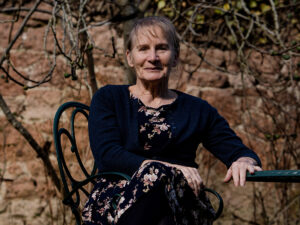

Most musicians build a career around the stage. Write the songs, rehearse with the band, book the gig, perform, tear down, repeat. And for years, that’s exactly what Jessica Leia did. But somewhere in the middle of all that hustling, she realized something that changed everything. She was pouring her entire life into logistics, and she had nothing lasting to show for it.
She describes those years of traditional live performance the way you’d picture an untied balloon full of air after you let it go. “Ping-ponging all over the place but getting nowhere,” she says, “and eventually winding up deflated on the floor.”
So Leia stopped waiting for the industry to find her. She walked away from the traditional performance model and built something entirely her own: Me and My Song, a multi-part video series that transforms each original composition into a four-part journey. Every song gets its origin story, a raw solo performance, behind-the-scenes studio footage, and a final produced music video. It’s part documentary, part album rollout, and completely under her creative control.
Now heading into its fourth season (launching this June), the series has evolved into something bigger than a release strategy. For the first time, Leia is structuring an entire season around a single theme. Her choice? Love songs. “It was easy to choose,” she says. “The world seems to love, love songs.”
What makes Leia’s story resonate beyond the music industry is how familiar the underlying tension feels. A woman with enormous creative output, years of expertise, and zero interest in waiting for gatekeepers to give her permission. Sound like anyone you know?
Raised in a working-class household in Concord, California, Leia started composing piano pieces at six years old. She grew up singing to herself in hiding spots (under furniture, tucked inside stacked baskets, alone in trees) because expressing her feelings openly wasn’t always safe. Music became the place where honesty was allowed, and that instinct has never left her work.
Today, she draws creative inspiration from the emotional precision of Carole King and Don Henley, and philosophical grounding from Alan Watts. But don’t expect her to talk about “influence” in the typical way. Leia thinks about music the way most people think about fragrance. A song either captures the real energy behind what inspired it, or it’s just trying to. As she puts it: “I want to make sure that when people smell my music, they know it’s an orange. Not orange fragrance #5.”
In our interview, Leia opens up about the turning points that pushed her away from live performance, the creative architecture behind each season of Me and My Song, why she can’t lie when she writes, and the one movie quote that keeps her going when the late nights stack up. (Hint: A certain blue fish said it first.)
Read our full interview with Jessica below.
Jessica Leia, Songwriter & Multimedia Artist

Your 4th Season launches in June—what can listeners expect from this new collection of songs, and how does it differ from previous seasons of Me and My Song?
Jessica Leia: Hey, thanks for asking! The music is a little different, so to speak, because I am finally, in Season 4, able to do what I had originally intended to do when I first starting making albums. That is to make each album with a theme! I started noticing, after having written many songs, that there were always these common threads that would run through them. Different songs, but common themes. For example, there always seems to be themes such as: time, life, death, love, light/darkness.
In my promo for Season 4, (which I will release sometime in May), I talk about how, although I had originally wanted to make albums with themes, the wild ride of life didn’t exactly allow me to do that. But that, finally, after 3 seasons of making “Me and My Song”, circumstances actually developed to the point of me being able to do so. Naturally, I chose love songs as my first “themed” album. It was easy to choose – the world seems to love, love songs. Lol
Although I cannot say that the music, itself will stick to any uniformity in sound, (each song will be its own creature), I can say that, in one way or another, they will all be about love.
You’ve structured each song as a four-part arc: origin story, raw solo performance, behind-the-scenes studio recording, and final produced version. What inspired this particular format, and how has it changed the way you relate to your own music?
Jessica Leia: Essentially, I created the format of the video series the way I did, in hopes that it would provide something for everybody. After years of performing live, I noticed that folks always would ask about the stories behind the songs they heard me perform. So, the PART 1 segment, where I explore the circumstances behind the writing of each song, was a given. I was originally anxious about that segment because, ironically, I am not a big fan of telling people what a song “is about”. I figure, that is for the listener to decide. Furthermore, there is so much infused inside of music, there really is no way you can explain a song you write… that is precisely why it is a song.
The PART 2 segment of “Me and My Song”, where I give a solo performance of the pieces, seemed like a necessary component as well. This was largely due to the fact that again, over the years of performing live, there had been many folks along the way who had mentioned that they enjoyed hearing me play with the band, but that they also very much just enjoyed hearing me perform with simply my vocals and my instrument. Furthermore, I personally wanted the audience to have an opportunity to hear how the song is when it comes straight from the factory, so to speak. In order that they might then see how said song evolves as other musicians add their parts, etc…
I knew from the inception of the video series that I would have a behind-the-scenes in a recording studio segment. Not only because I thought that the audience would enjoy being part of that process, (especially fellow musicians), but also because that segment of the series, (PART 3), affords the audience an opportunity to see the band and myself in a non-performance mode – to come along and hang out with us and see that we’re just normal folks recording tunes … well, mostly normal. Lol
And then naturally, the PART 4 segment, where the final song is released, was also a given from the start as well. If you are going to build the hype up about the story behind and creation of any particular song, you gotta play it for the folks back home!
Originally, in Season 1 of “Me and My Song”, I also had the recording of the final vocals attached to PART 4. So, in that 1st season, folks can watch some behind-the-scenes for the vocal recording sessions as well. Alas, I had to cut a couple of things out of the series after Season 1 because as it was, it was just far too much for one girl to handle. What’s more, is I became more comfortable with the process of recording vocals in a studio by the time Season 2 rolled around and that just doesn’t make for very interesting footage. Lol … Still, the actual cuts from the actual vocal sessions are used in the making of the final music video. I felt that was still a great way for the audience to at least somewhat feel as if they were there inside of the process of those vocal recordings.
How has it changed how I relate to my music? Well, that’s kind of a funny thing. When one writes a song, it can be and often is a diving into the deeper, more sensitive, completely honest and vulnerable sides of oneself. You can feel safe doing that when you are writing because there’s no one there to judge what you are feeling or contemplating or exploring. Then, when you end up sharing that with the world because you are performing it, recording it, or creating a video series where you talk all about it, you can feel very exposed. So, in essence, you find yourself having to detach from the song, itself. You cannot keep a level-head as you bring into the world something that is ultimately going to be treated as a product, if you have a bunch of hang ups about the fact that there’s a piece of your soul wrapped up inside of it. It’s a bizarre balance: you have to detach and yet, you have to delve completely into it if you want to execute a good performance.
After years of traditional live performances, what was the turning point that made you realize you needed to step away from that model and create a “permanent home” for your music outside the stage?
Jessica Leia: Well, if you can imagine what happens when you let go of an untied balloon full of air, you’ll have a pretty good visual for how it always felt for me doing regular live performances. I was ping-ponging all over the place but getting nowhere and eventually winding up deflated on the floor. Even though the “experts” say you should perform live regularly in order to build a fan base, you can’t really accomplish that unless you can get in front of big crowds. And naturally, you can’t really gain access to big crowds unless you have a large fan base… (or unless you have the right connections and resources). Catch 22.
Ultimately, I realized that I was getting nowhere. Furthermore, I am, at the heart of the matter, a songwriter. I didn’t want to get stuck performing the same dozen or 2 songs over and over again because those were the songs that the band knew how to play. Meanwhile, I was writing lists of songs that I was never getting the opportunity to share with others. Basically, I wanted my music to get in to the world and it wasn’t happening through the medium of live performance. Too much time and too many resources and my whole life was being spent on just executing the logistics of everything it takes to coordinate and market and pitch and perform regularly with a band.
At the end of the day, I had nothing to show for all of the work I was killing myself with. I realized that if I wanted to get the music into the world, I needed to make albums so that I would have something to show for it. And after years and years of pitching to record companies, publishers, producers, music lawyers, etc., I also realized that I wasn’t getting any help from any higher ups and that I just needed to do it myself.
Once that decision had been made, I really wanted to do something special with the way I presented my music to the world. There are a million and one people making music out there and I wanted to do more than just record songs and throw them out into the noise of the inner-webs. And presto! “Me and My Song” was born.
You describe your songs as “contemplative, moody, existential, humorous, and human.” How do you balance these different emotional tones within a single project or season?
Jessica Leia: Ah yes, I think there has always been this sort of protocol of painting individual music projects with a certain tone, a certain commonality so that, the project, in a sense, can match itself. I suck at that. Lol … Because the songs that I write span across and borrow from so many different genres and playing styles, the overall albums created in the show won’t necessarily have any kind of uniform “sound” so to speak. I may even vocally sound quite different from one song to the next, depending on what type of vocals I am executing and in what register I am singing. This, however, is another one of the many smaller reasons, if you will, that I invented the video series. “Me and My Song” affords me the opportunity to just present each song as it is… and it can just be that. Not only does the song stand on its own as an episode within the video series, but I literally release each song as a single during the episode. So, it doesn’t have to match anything. It isn’t until the end of the season that I wrap up all of those songs in a pretty bow and put them together as an album, burn the CDs and have an album release party. In that sense, the video series itself, becomes the tie that binds, the way to balance together such a broad spectrum of musical ideas and moods.
Growing up in a working-class household in Concord, California, how did that environment shape the themes and authenticity that run through your music today?
Jessica Leia: I’m not sure exactly. Except to say that, at that time, on planet earth, you couldn’t just tap your phone and hear any type or style of music you wanted. Basically, you listened to the radio or bought recordings and maybe even went to live performances if you could afford it. I found, that from the very start, as a little girl when I would listen to music, (a lot of Country, Classical and New Age piano music that I would borrow from my parent’s modest collection of cassette tapes), or when I would hear songs on the radio or learn songs in a piano book, that I always felt as if I were looking for music I couldn’t find. That is to say, songs would never go the way I thought they should. Lol
Because we weren’t rich folks and because it wasn’t the world it is today, I had very little access to any kind of vast array of music, and so, consequently, made my own songs. That way, I could hear the sounds I wanted to and make songs be what I thought they should be. I found that to be incredibly satisfying. I started composing piano pieces at 6 and in fact, my first two albums, which I recorded long before “Me and My Song” was born, are made up of my original piano compositions from earlier in life. I do have another album’s worth of piano compositions from that time, still sitting in my brain, waiting for their turn. But since the inception of my video series, I’ve yet to find the time to slap those babies down on an album.
Also, as is the case for so many others, throughout life, music has been an outlet for me. I was never heard as a child and was often punished for expressing the feelings I had. That’s not to bag on my upbringing; it’s just the way things were. I had to turn somewhere. So, I sang to myself. I played to myself. In that sense, from the start, music creation, for me, has always been about sitting with myself and honestly conveying what it is that I feel and/or am witnessing and experiencing.
You’ve been writing songs since childhood. Can you take us back to one of your earliest songs—what was it about, and what does it reveal about who you were then versus who you are now?
Jessica Leia: Fun you should ask! As I mentioned, my next album to be released through “Me and My Song” is a collection of songs about love. After that, I, however, plan to release an album of songs about time. I mention this because although I do recall spending much time as a little girl, alone in trees and bushes and under furniture, singing songs to myself about what was happening in life, (my middle brother caught me once and still loves to tease me about it), the very first conscious recollection I have of doing this was when I was preschool age; 3 and a half / 4 years old.
I had these two baskets that stacked on top of each other where we could keep toys and I used to love to stick my head in between them and lie down. (Insert basket case jokes here). I don’t know, it just made me feel safe and cozy. In this instance, because I was, in fact, waiting for my turn to go to pre-school, I was lying there with my head in between two baskets thinking about time: how much I didn’t understand it, how strange I thought it was. It was also rainy and stormy outside, so I incorporated that weather into my thoughts as well and wrote the first little jangle I ever consciously recall having written, which spoke of both time and thunder. I still remember it completely and maybe will even sing it on my promo for Season 5 when it rolls around. Lol … And I guess since I’m still a basket case, alone in a room singing to myself about how weird I think everything is, it very well may be that the me now isn’t so different from the me then… Except that now I do it on it stage with cameras turned on.
You cite Carole King and Don Henley as major influences for their integration of melody, rhythm, and lyric. What specific lessons have you taken from their work and applied to your own songwriting?
Jessica Leia: I feel as if I were to answer this question in terms of melody and rhythm and lyric, I wouldn’t be quite hitting the nail on the head, so to speak. Yes, I admire their work for all of these things. But really, it’s the way they capture the spirit of that which they are expressing that I admire. Yes, they use the mechanics of music to do that. But music is the surface level response to something deeper. There is a spirit to everything. There is an underlying pattern of energy in everything. If you can detect that pattern and then transcribe it into a song, I’m gonna love it.
I have always been impressed by this attribute in Carole and Don not only because they execute this so well in their music, but also because they are among a few others I’ve come across, who have done this prolifically, in so many of their songs. I often enough listen to music here and there, which, to me, really seems to embody the energy that inspired it. But I have found many times as I go to look for more from the same artist(s), that they don’t necessarily pull off the same conveyance in many of their other songs.
I like to use fragrance as a metaphor for energy because smelling things is something most people understand. If you smell an orange, you know it’s an orange. If you smell “orange fragrance #5” you know it’s something that is TRYING to smell like orange. This is the way it is for me when I listen to music. It either seems to me that the song is, in essence, very nicely expressing the underlying energy that inspired it, or it is only TRYING to do so. I always want to make sure I do as folks such as Carole King and Don Henley have done. You know… to make sure that when people smell my music, they KNOW it’s an orange. Lol
Alan Watts’ teachings on self, reality, and consciousness have influenced your work. How do his philosophical ideas show up in your lyrics or your approach to making music?
Jessica Leia: I wouldn’t say necessarily that he has influenced my work. There are times when certain philosophers, spiritual teachings or even movies influence what I write (I always let you know all about that in PART 1 of “Me and My Song” wink wink). But Alan Watts is by far my favorite philosopher. But if he were to ever show up in my lyrics, it would only be because he was already always there. Lol … I’m pretty sure he would agree with that. Alan is my go-to if I need a little nudge back into my eternal perspective. He makes me laugh cosmic laughs and those are the best kind of laughs.
You’ve taught piano for over twenty years while writing prolifically. How has teaching shaped your understanding of music, and has it influenced the way you write or perform?
Jessica Leia: Absolutely. I originally only really made music through my right brain. You have to teach music from the left brain. If I’d have never gone into teaching music, I would not have had to understand the mechanics of music the way I have to in order to teach them. And although I still create from a very right brain kind of place, really, having your whole brain at your disposal is the best way to go. Lol
I may be, for example, just hashing out a melody that seems to capture the energy I am holding in my space. After having captured what I wanted to, I may have a sense I need to go in some other direction with the newborn song but not really know where to go. In that case, I can borrow from good ‘ol left brain and take a look at what I just did and say things like, “Okay, I just did a I, ii, V progression, where can I go to lift the mood?”. Inevitably left-brain kicks in and says something like “Jump up a 3rd and make that the new V and change keys.” Or some such nerdy musician-speak like that. So, it’s a tag team, really. I can allow my heart to feel what it feels and allow my brain to guide things when the feelings get sloppy.
Before I started teaching, I was pretty much always very right-brained in my creating. So, in a sense, I knew what I was doing intuitively, but I would have had a hard time communicating that to anyone. Teaching has made me HAVE to be able to communicate what is going on. This ability to “left-brain it”, as it were, has also been quite handy when communicating with my fellow musicians while working on projects together.
You’re devoted to health, self-inquiry, and creative honesty. How do these values inform not just the content of your songs, but also the way you structure your creative life?
Jessica Leia: Structure? What’s that? Lol … I actually discuss in one of my monologues on, “Me and My Song” about how songwriting seems to force my honesty. Not that I would otherwise be dishonest, but we do hide things from ourselves. I have found that songwriting has always been a great way to just sit down and be honest with myself. Frankly, because as I say in the monologue, I just can’t lie when I write. I mean, I suppose I could, but then I would get this uncomfortable feeling in my stomach and be very unhappy with what I had written. Lol
That said, that ability, flexing that muscle of self-honestly (which I much credit music for teaching me), becomes a muscle like any other. When that muscle is developed, it can be used in all areas of your life. If you sit down to create, you are either directly or indirectly going to be asking your inner self what it feels. In the act of expressing that through a medium of art, you are allowed to express it honestly, without placing any judgements on it. You are just creating after all. For me, that is often the content of the songs.
And yes, health is SO important to me. And I gotta say, as an artist who partly just wants to smoke and drink and not brush my teeth or comb my hair for days on end while I get lost in my work, it can be a real battle to remember to budget that time for self-care so that this avatar stays fresh and energized enough to do the work in this life which I feel I must.
Beyond Season 4, where do you see “Me and My Song” evolving? And what do you hope audiences take away from witnessing how a song comes into being?
Jessica Leia: I’ll answer the 2nd question first and say that, if anything, “Me and My Song” is an honest, authentic and fun experience. I am just being myself and I am just singing my songs. I think that’s refreshing for people. And I hope that folks can enjoy the process of the honesty, the work, the bloopers and everything enough to not only feel like they are a part of the experience, but to mayhaps be emboldened to be their own selves and to sing their own songs.
As far as where I go after Season 4, well… Season 5 naturally! I am already planning recording dates for Season 5 even though I have yet to release Season 4. This is the way it goes though. It takes 2 to 3 years to make 1 season of the video series, so I have to get going on the actual recording of the music the instant I have enough bandwidth and finances available to do so.
Lastly, is there a specific mantra, quote, or affirmation that you hold close to your heart (This will be for a graphic we use on social with your photo)
Jessica Leia: You know, it’s going to sound a bit silly, but ever since I saw “Finding Nemo”, when I find myself struggling to finish editing that last video or pushing to tear down and load up that last bit of equipment at a shoot, or checking that last thing off of my daily list or pushing to get in that late night workout, I often catch myself kind of chanting under my breath, “Just keep swimming. Just keep swimming.” Lol … True story.

Emily Sprinkle, also known as Emma Loggins, is a designer, marketer, blogger, and speaker. She is the Editor-In-Chief for Women's Business Daily where she pulls from her experience as the CEO and Director of Strategy for Excite Creative Studios, where she specializes in web development, UI/UX design, social media marketing, and overall strategy for her clients.
Emily has also written for CNN, Autotrader, The Guardian, and is also the Editor-In-Chief for the geek lifestyle site FanBolt.com
Related Posts: