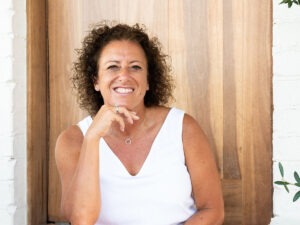

Erin Mittelstaedt didn’t take the obvious route to the corner office. She studied music. She advocated for victims. She managed a Trader Joe’s. And now she’s running one of the country’s most impactful food companies.
As CEO of The FruitGuys, Erin leads a mission-driven produce company that delivers fresh fruit to workplaces nationwide while reinvesting in small farms, feeding communities, and quietly dismantling the idea that profitability and purpose can’t coexist.
Over sixteen years, she’s risen through the ranks at The FruitGuys, navigating a male-dominated agriculture industry and redefining what leadership looks like along the way. In this conversation, she gets candid about the moments that still test her credibility, the partnership with her wife that makes balancing CEO life and family possible, and why her personal mantra (“Be Brave”) drives everything from tough feedback conversations to pushing through the discomfort that growth demands.
She also pulls back the curtain on the tangible impact of this work. How a $5,000 grant can change the trajectory of a struggling small farm. Why putting fresh produce in an office builds something bigger than a wellness program (it builds culture, connection, and community). And what she’d tell any business leader who wants to weave sustainability into their operations but has no idea where to start.
This is a conversation about servant leadership, about learning that the best leaders are facilitators rather than dictators, and about building a business that proves doing good and doing well were never mutually exclusive.
Read our full interview with Erin below.
Erin Mittelstaedt, CEO at The FruitGuys

As a female CEO in the traditionally male-dominated produce and agriculture industry, what have been your biggest challenges in establishing credibility and authority, and how have you overcome them?
Erin Mittelstaedt: I’ve been lucky in my career because even in a male-dominated industry, I feel heard and listened to. That’s in part because I’ve had supportive coworkers and partners (both male and female) along the way, and in part because I take opportunities to make my voice heard. Confidence is key; you have to sound like an authority to build credibility.
Small challenges still arise. I’ve found people sometimes direct the conversation to the man in the room first, even if I’m the decision-maker. Sometimes the challenge is in my own head, where I worry that someone is interacting with my male counterpart differently than they are with me, or that I’m being too accommodating (a historically female trait).
To overcome these challenges, I’ve tried a few things:
- I build my confidence by preparing for every situation, but when I jump in, I give myself some grace, knowing that there may be learning curves. Confidence comes over time with practice and experience.
- When I go into a meeting with someone else on my team, we prep ahead of time to make sure both of our voices are heard.
- As a leader, I try to make sure I’m creating space in the conversation for other voices and not accidentally leaving someone out.
What strategies have you employed to balance the demanding role of leading a mission-driven company while maintaining your personal well-being and work-life harmony?
Erin Mittelstaedt: Luckily, I have a very supportive and understanding wife. We talked a lot about how taking on the CEO role would impact our lives, and we decided together to move forward. One strategy we’ve used to balance our personal and work lives is shifting our responsibilities.
As my travel schedule increased, for example, my wife took the lead on some activities with our two young boys that I did in the past. I also build in flexibility into my schedule whenever I can. I might take an early meeting with someone on the East Coast so that in the afternoon, I have time to help with kid pickups. Or I’ll work early in the morning on the weekend while the kids are having screen time, so I can be available during the day for family time. Setting clear priorities is key.
Early on in my role as CEO, I was trying to do too many things in one day, and my wife reminded me that she could take them—they weren’t as important as the other work I needed to do. In the end, balancing work and life is a give-and-take. Sometimes I have to work more because of a deadline or travel needs, and sometimes I have more flexibility, so I try to take advantage of those flexible times when I can.
How do you define your personal leadership philosophy, and how has it evolved over your tenure at The FruitGuys?
Erin Mittelstaedt: “People first” and “servant leadership” come to mind when I think about my personal leadership philosophy. Businesses need good people to work well, so investing in them is key.
I think strong leadership starts with respect and treating others as you want to be treated. You have to respect their points of view and give them space to speak up. I used to think that leaders were the ones with all of the ideas, but that’s not necessarily true. Good leaders are good facilitators; they give focus and clarity to help bring out the best in people, but they aren’t dictators.
I also prioritize holding people accountable and giving constructive feedback. Early on in my career, I struggled with that and shied away from those difficult conversations, but now I feel obligated to be transparent and honest, in a respectful way. If you aren’t giving that feedback, you aren’t helping the employee develop, and you’re not being realistic about what success looks like. This can still be a struggle for me, but it is a skill that has evolved over the course of my career.
The FruitGuys has been supporting small farms through your grant program for over two decades. Can you share a specific story that illustrates the tangible impact this program has had on a farming family or community?
Erin Mittelstaedt: We’ve funded so many great projects that have positively impacted small farms and their communities. I’m particularly struck by those projects—like the installation of high tunnels at Aspen Ridge Farms in Caldwell, Idaho—that actually extend a farm’s growing season. Farming is hard work, and most farms can’t grow year-round, which means their income isn’t consistent. Helping a farm generate a few more weeks of income is powerful.
We’ve funded other projects that impact multiple community members, like a recent project at Liberation Farms, which is operated by the Somali Bantu Community Association in Wales, Maine. The farm received a $4,965 grant to strengthen sustainable farming practices across its 50-acre cooperative. The investment has already improved productivity and resilience, with 30 Somali Bantu farmers using new irrigation, row covers, and trellising to support more than 2,000 tomato plants, reduce early pest pressure, and build healthier soils.
Beyond increased yields, the project has enhanced pollinator habitat, beautified the farm, and is helping grow long-term community farming capacity despite challenges from a dry summer.
How do you measure success beyond traditional financial metrics when running a mission-driven company, and what does “doing well by doing good” actually look like in practice?
Erin Mittelstaedt: I look to the tenure of our team, clients, and partners when I think about success. If we’re treating them well, then there shouldn’t be a lot of turnover. (For our team, our average tenure is seven years, and 30% of our employees have spent over 10 years at The FruitGuys.) It’s also important to me that our team members and partners are engaged and feel positive about our working relationships. We track this through surveys, but I also keep an eye on it through conversations and relationship-building.
Beyond the financial metrics, we also think about success in terms of our impact, including how much food we’ve donated to our hunger relief partners and the number of grants we’ve given to small farms. In 2025, we:
- Donated 31% of the value of our annual profits to relieve hunger and support small farms
- Donated 1,023,923 servings of food to hunger relief organizations
- Diverted 476 tons of greenhouse gas emissions through food donations
- Awarded 21 sustainability grants to small farms
Your GoodWorks program reinvests in local food systems—what inspired this initiative, and what have been the most surprising outcomes or lessons learned from it?
Erin Mittelstaedt: The first GoodWorks project grew out of our relationship with one of our farm partners in Sonoma County, California. The farmer was looking to install owl boxes as a way to help with pest control. Many farms don’t have a lot of excess income to reinvest back into their operations, and these kinds of projects end up on the back burner.
So we launched the GoodWorks program to help them financially and support other farms we work with. Eventually, we felt the need to broaden our impact and help not just farms we knew but small farms across the US, and we launched The FruitGuys Community Fund and its grant program.
The most surprising outcome of the grant program for me was realizing that even a small grant of $5000 or less can make a big impact. Small farms are so vitally important to our food system and our economy, and yet, they’re extremely difficult to sustain financially. Many small farmers have an off-farm, secondary source of income just to keep going. A $5,000 grant can be life-changing for farmers doing important work, and providing those grants is incredibly rewarding.
Building a sustainable supply chain in the produce industry comes with unique challenges. What are the biggest obstacles you face, and how are you innovating to overcome them?
Erin Mittelstaedt: One modern challenge we face is ensuring that the small farms we work with meet required food safety requirements. Food safety regulations have changed over the past few years, and we’ve met some small farms that aren’t ready to sell beyond a farmers market because they don’t fully understand those standards or can’t afford to pay for third-party auditing.
With that in mind, we’re finding ways to ensure compliance but also offer support. We’ve connected farms with resources to help them keep their documents up to date, and consulted with them on setting pricing. We want to help all of our farm partners grow and become market-ready, even if that means they’ll sell beyond The FruitGuys.
Two other challenges to building a sustainable supply chain are seasonality and access. It’s our default in the United States to move a lot of produce across the country and around the world. Bananas, our most consumed fruit, aren’t grown in the US, for example.
I’m not suggesting we should stop eating bananas—they have a lot of nutritional benefits, and it’s great to support other growing regions too. But I think we have to understand the impact of imports and think creatively about how to mitigate it and support local when we can, while still giving people the variety they crave.
How do you balance the business realities of profitability and growth with your commitment to supporting small farms and sustainable practices, especially when these goals can sometimes be in tension?
Erin Mittelstaedt: I don’t see a conflict between profitability and giving back. Technically, they are at odds because the money we donate could be profit instead, but our commitment to giving back is part of who we are, and our clients want to work with businesses that align with their values. So I see all of the good work we do as a direct contributor to our growth. I also believe that all businesses have an immense opportunity and responsibility to be a force for good in the world, so we’ll continue to operate with that in mind.
What advice would you give to other business leaders who want to integrate sustainability into their operations but feel overwhelmed by where to start?
Erin Mittelstaedt: It is overwhelming, but pick one thing that is the most important to you or an area of the most impact, and establish your baseline. Can you figure out how much waste you send to the landfill, or how much water you use? Pick something, find your baseline, and then try to reduce it.
We implemented a new way of tracking our carbon footprint last year, and I immediately wanted to know, “How can we do better?” The consultants for the software told us, “Wait a year. Get a baseline.” It’s also important to give yourself grace. Commit to something, start tracking it, find your baseline, and also recognize that change won’t happen overnight.
You might be tracking things the wrong way and need to revisit your process, and that’s okay. That’s what happened to us the first time we tried tracking our carbon footprint, but now we’re doing it again and making it a bigger priority. I think it’s important to also recognize that this is about constant improvement and not a “one and done” solution.
With the shift to remote and hybrid work models, how has the role of workplace wellness—and specifically fresh produce in the office—evolved, and how is The FruitGuys adapting?
Erin Mittelstaedt: During the COVID-19 pandemic, everything changed. We lost 90% of our business in two weeks when people stopped going into the office. Now, as people return to the office and embrace hybrid schedules, fruit is more important than ever because it helps make those office days enticing.
Additionally, a lot of our clients are looking for ways to engage their employees, and food is a great way to bring people together. When you choose healthy fruit as that food, it supports employee wellness as well.
What do you see as the future of food in the workplace over the next 5-10 years, and how is The FruitGuys positioning itself to lead in that space?
Erin Mittelstaedt: Workplace food follows the consumer trends we see in the market. When cold brew and crazy coffee concoctions started showing up in the coffee shops, offices tried to replicate them. I expect the current trend of reducing overly processed foods and focusing on healthy, whole foods (while still leaving room for little indulgences) will continue. The FruitGuys will keep celebrating fruit as a healthy, easy, and fresh snack. We also deliver better-for-you packaged snacks, and we’ll continue to lean into that space as well.
Beyond the obvious nutritional benefits, what impact has fresh, accessible produce had on workplace culture, employee morale, and productivity?
Erin Mittelstaedt: Providing fresh, healthy food has a measurable and meaningful impact on how employees feel and perform at work. Our internal experience and external research both reinforce that it’s one of the most valued workplace perks. It’s linked to higher engagement, productivity, and even attendance.
One of our clients, for example, recently shared with a partner of ours that our fresh fruit makes their office feel more positive, welcoming, and worth the commute. Their employees gather around the fruit in the break room and start conversations that ultimately build up their working relationships.
We’ve also seen our remote workers benefit from fresh produce. We send everyone—in-person, hybrid, and remote—a personal fruit box every week. That produce is nourishing, supports morale, reduces stress, and helps our team bring more focus and energy to their work. It also signals that their well-being is a real priority for us.
Looking back on your journey, what’s one piece of advice you wish you had received earlier in your career that would have made your path easier or faster?
Erin Mittelstaedt: Be brave, and talk to people even if it makes you uncomfortable. You never know who you’re going to meet. Maybe it’s someone who doesn’t want to talk, but maybe it’s someone who works in a field that you’re really interested in. If a friend or business connection introduces you to someone new and you want to learn more about them, offer to take them to coffee. Don’t worry about whether they’ll be interested—just ask.
“Learn from others” is a great piece of advice. Find a mentor and talk to other people who have gone through what you’re going through, or even something completely different, because they can give you a different perspective.
The people around you might also want to connect, but feel uncomfortable starting the conversation. So, just start talking! What have you got to lose?
Lastly, is there a specific mantra, quote, or affirmation that you hold close to your heart?
Erin Mittelstaedt: It’s tough to pick just one for me, and it’s changed over time depending on what I’m working on. Right now, I try to remember, “Be Brave.”
It’s hard to do things that scare us or make us uncomfortable, but they’re necessary for growth. When we push ourselves or face new experiences, doubt and insecurity can surface, and we have to be brave enough to push through. In those moments, simply reminding ourselves to be brave, and that we are enough, can help.

Emily Sprinkle, also known as Emma Loggins, is a designer, marketer, blogger, and speaker. She is the Editor-In-Chief for Women's Business Daily where she pulls from her experience as the CEO and Director of Strategy for Excite Creative Studios, where she specializes in web development, UI/UX design, social media marketing, and overall strategy for her clients.
Emily has also written for CNN, Autotrader, The Guardian, and is also the Editor-In-Chief for the geek lifestyle site FanBolt.com
Related Posts: