
Here’s a pattern that will sound painfully familiar to a lot of you: You’re genuinely great at what you do. Your clients get results. Your expertise is real. But somehow, you keep watching people with half your experience land the speaking gigs, the press features, and the partnerships while you stay the best-kept secret in your industry.
And every piece of advice you get about fixing that problem seems to land in one of two camps. Either grind harder (post every day, pitch constantly, network until your face hurts) or accept that staying under the radar is just the price of keeping your sanity and your boundaries intact.
Katrina Owens thinks both of those options are a lie. And she’s built an entire business around proving it.
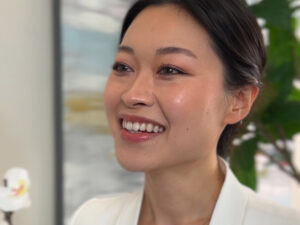
As a personal branding and PR strategist, podcast host, and former corporate marketing executive, Katrina works with women who are done being invisible but refuse to burn their lives down in order to be seen. She calls it “sustainable visibility,” and the premise is simple, even though most of the industry ignores it: you can become a recognized authority and turn your expertise into real revenue without sacrificing your health, your values, or your ability to pick your kids up from school.
What makes her approach click for women in particular is the part nobody else seems to talk about. Visibility is not just about being seen. It’s about being seen on your terms, for the right work, by the people who are actually going to hire you, book you, or partner with you. Katrina teaches founders and leaders how to build what she calls “famous-feeling” personal brands. Not internet fame. Not content-farm-level output. Strategic, intentional positioning that pulls opportunities toward you instead of requiring you to chase every single one.
Her framework is rooted in Blue Ocean Strategy, which is a fancy way of saying she helps clients stop competing in crowded spaces and start carving out a category of one. The results speak for themselves. Her clients have landed features in Vogue and The New York Times, secured paid speaking engagements, built multiple revenue streams, and shown up on top-charting podcasts. All while keeping the boundaries that make success actually feel like success instead of a more glamorous version of the burnout they were trying to escape.
In this conversation, Katrina gets into the real turning points that pushed her out of corporate and into building a business on her own terms, the exact positioning framework she uses with clients, and practical advice on everything from handling the vulnerability that comes with putting yourself out there to creating enough flexibility in your business for major life decisions. If you’ve ever felt like you had to choose between your ambition and your well-being, this one’s going to land.
Read our full interview with Katrina below.
Katrina Owens, Founder of Katrina Owens Media Inc.

Can you share the pivotal moment when you realized that traditional definitions of success weren’t serving ambitious women, and what led you to focus on “sustainable visibility” rather than hustle culture?
Katrina Owens: My pivotal moment came when I was running a traditional marketing and public relations agency and realized we had become a content farm. My team was working incredibly hard for our clients, producing content, doing press outreach, executing campaign after campaign. Month over month, we were doing so much. But when it came to tangible financial return, it was difficult to clearly see what that actually was, because we were trying to do everything at once without linking it to specific business outcomes.
It started to feel like hustle for the sake of hustle.
What I love about sustainable visibility is that it shifts the focus entirely. When we build a personal brand that is truly press-worthy, and by that I mean uniquely defined, clearly positioned, and genuinely differentiated, it naturally attracts opportunities that most people think they need to constantly pitch and chase.
And at the end of the day, I’m in entrepreneurship for the rest of my life. So are the clients I work with. So instead of churning out endless content or obsessing over the next press hit, I prefer to take a long-term view. What are we building toward in one year, five years, ten years? What reputation are we really cultivating?
When we build a personal brand and visibility strategy that supports that long-term vision, the more we show up authentically in the mission we’re here to serve, and the easier visibility actually becomes.
You emphasize building “famous-feeling” personal brands without sacrificing authenticity or well-being. What does a “famous-feeling” brand look like in practice, and how is it different from traditional celebrity or influencer branding?
Katrina Owens: When I talk about fame, it really is a feeling.
When we look at a lot of celebrities or influencers, there’s often extra noise or muddy waters around what they actually do or what they’re known for. With influencers in particular, which isn’t the type of business I work with, there’s also the risk of becoming known more for the brands you align yourself with than for your own expertise.
When I talk about famous-feeling personal brands, I mean it from a professional, business-building perspective: As a business owner, what do you want to be known for?
Once you decide that specific thing, everything shifts. You start attracting the right audience. The right opportunities. The right conversations. And that attraction, that effortless magnetism that comes from leading from an authentic place, is what actually creates the feeling of fame.
Many women in our community struggle with the fear of being perceived as self-promotional or “too much.” How do you help your clients overcome the internal resistance to becoming visible?
Katrina Owens: I support clients with this because it’s a path I walked myself. For most of my life, I wanted to be famous, but I carried a lot of shame around that desire, thinking that it was “bad” or “vain”. During my corporate career, I actually stayed very much in the behind-the-scenes role because of this shame, even though that was never what I truly wanted for myself.
Now, as someone who has grown a successful PR business, which is literally all about self-promotion, it always comes back to remembering that the thing you’re selling or sharing has an impact on people’s lives.
Whether it’s a service, a product, or a message, you’re offering it because you genuinely believe it has value for the people you’re meant to serve, so it becomes your responsibility to make sure it gets in front of the people who need it most. Getting your work in front of more people means you get to help more people. And that reframes visibility from something vain into something purposeful.
For a woman who is excellent at her work but remains under-recognized, what are the first three strategic steps she should take to begin building her visibility and establishing herself as an authority?
Katrina Owens: The first strategic step is being able to clearly articulate the impact of your work: What is the thing you are excellent at? And what is the transformation or outcome it creates?
The more specific you can get here, the easier everything else becomes. When you’re crystal clear on the impact you deliver, all of the tactical visibility work starts to feel more natural.
The second step is diving into owned media. Owned media includes your social media channels, your website, your email list, your Substack, your blog, your podcast, anywhere you control the message. For anyone who wants to build a highly visible personal brand, it starts with you. It starts by consistently communicating and celebrating the transformation you create across your owned media platforms. When you do that well, PR opportunities often begin to come in organically because people can clearly see what you stand for.
The third step is earned media. Once you have a consistent brand presence and you can see visibility building, you’re ready for what we traditionally think of as public relations: media features, speaking engagements, podcast interviews.
Earned media is what builds brand authority. We cannot build true authority without third-party validation, because when someone else highlights your expertise, it carries a different weight than simply trying to convince someone why you may be trustworthy.
Owned media generates brand awareness, while earned media generates brand authority, and both are required to build a highly recognized personal brand.
How do you balance the need for consistent visibility with the reality of our audience’s demanding schedules—managing careers, businesses, families, and personal well-being? What does sustainable personal branding actually look like week-to-week?
Katrina Owens: This is exactly why I spend so much time teaching owned media and how we communicate our work, our transformation, and our impact.
When you have a strong personal brand, you actually release the need to constantly be sourcing visibility opportunities, because they start coming to you instead. I have clients who never do PR outreach at all, they simply receive enough inbound opportunities because of their positioning and content that they don’t need to spend additional time pitching.
Now, if you’re someone who wants to increase the volume of opportunities or visibility, I recommend a PR power hour every single week. One dedicated hour for outreach and finding new opportunities. When we add outreach in, it simply increases bookings and increases the likelihood of someone saying yes. But it’s also important to recognize that increased media opportunities come with increased workload.
Preparing for speaking engagements, completing interviews, and showing up on podcasts all takes time and energy.
That’s why I see personal branding and PR as two distinct roles.Your personal brand is the foundation. PR is the amplifier. A strong personal brand is the root of everything, and PR becomes the dial you can turn up or down depending on what your life actually looks like. That’s actually what makes visibility sustainable; it adapts to your seasons instead of demanding constant output.

Can you walk us through your framework for helping women position themselves as thought leaders? What are the most common positioning mistakes you see talented professionals make?
Katrina Owens: I use the Blue Ocean Strategy framework to help clients position themselves as thought leaders. The idea is simple: when you’re operating in a red ocean, you’re surrounded by competition. It feels crowded, reactive, and unstable. But when you build a blue ocean, your own category of one, it feels expansive. There’s no comparison. It’s like being on a mega yacht in the south of France instead of swimming with sharks.
There are three core pieces to this framework: focus, differentiation, and tagline. Focus means choosing one clear topic. For me, that’s public relations for personal brands. Thought leadership starts with clarity, because when you try to be known for everything, you end up being known for nothing.
The second piece is differentiation. This is where you define how you’re different from others who do similar work, whether they’re direct or indirect competitors. In my case, I teach business owners how to build their own personal brands using PR. That makes me a bit of an industry disruptor, because traditional PR thrives on mystery and gatekeeping — access to journalists, contacts, and insider knowledge. I go against that grain by making PR accessible and teachable.
The third piece is your tagline, the language people use to remember you. For me, that’s helping business owners feel famous for their work and build six-figure personal brands. Words like “famous” and “six figures” attract the right clients because they speak directly to desire and outcome.
This is the framework I start with for every single client.
The most common positioning mistake I see is trying to decide what the market wants before getting honest about what you actually want. People start shaping their brand around perceived demand instead of their own truth, and it always ends up feeling inauthentic and disconnected.
Another major mistake is letting competition stop you from claiming your space. Having competitors is just business. Many people can share the same focus, but what matters is differentiation. When you become intentional about how you’re different, that’s when you truly separate yourself.
How do you advise women to handle the vulnerability that comes with increased visibility, especially when sharing their expertise might invite criticism or judgment in competitive environments?
Katrina Owens: I always say: visibility is not for the weak. It feels exposing and vulnerable to share your stories, your thoughts, and your insights out loud when anyone can listen and respond.
That’s why it’s so important to have a deep connection to your purpose, your mission, and the impact you want to leave on the world. When you’re rooted in that, criticism doesn’t shake you in the same way. If someone disagrees, you’re able to say, “Just because someone thinks this way doesn’t change what I believe is true and right for me.” That connection, and building your personal brand from a place of authenticity, is the core of everything.
I also believe entrepreneurship is the biggest personal development journey you’ll ever go on. And when you layer visibility on top of that, it becomes even more true. Building a personal brand invites more voices, more opinions, and more discussion around you and your work, so you have to be just as committed to your mindset as you are to your marketing. Criticism and disagreement will come no matter how thoughtful or kind you are. But when you’re grounded in yourself and clear on your mission, those moments don’t break you.
You emphasize that visibility shouldn’t come at the cost of well-being. Can you share specific boundaries or practices you teach your clients to maintain as they step into more prominent leadership roles?
Katrina Owens: Visibility should feel fun, exciting, and expansive. As soon as it starts to feel like pressure, urgency, or exhaustion, that’s usually a sign we’re not building it from a place of sustainability.
Visibility does include showing up consistently on social media, which is why I always encourage people to have a system for it. I spend time posting and sharing, but I try not to spend time scrolling. Scrolling is where we lose time and productivity, and it’s also where we let in noise. We start watching what other people are doing and quietly judging ourselves for what we may or may not be doing.
That’s why boundaries with technology are so important. Practically speaking, I don’t go on my phone for the first two hours of my morning, and I try to put it away two hours before bed. That gives me space to be with myself without the added conversation and dialogue that comes from being visible online all day.
Those tech boundaries naturally blend into other boundaries too because as you step into bigger leadership roles, there will always be people who want more of your time, more access, or more from you, and not all of it will feel aligned. It’s okay to start containing how you expend your energy, what that looks like, and which conversations you engage in.
Your energy is one of your most precious assets when it comes to visibility, so it’’s your responsibility to protect it. And sometimes that means not being available for everything, all the time, and to everyone.
For women who are considering whether having children fits into their ambitious career goals, how can building a strong personal brand actually provide more flexibility and options rather than limiting them?
Katrina Owens: This is a really great question, and as someone who is still uncertain about whether children are in my future, I’ve already seen in a very short amount of time how building a profitable personal brand has given me more flexibility and choice.
When you build a personal brand, you naturally open up additional revenue streams like brand partnerships, content monetization (through your podcast, social media, blog, or email), high-ticket consulting, paid speaking, and even opportunities like writing books. Your personal brand is the driver behind all of these income streams, and they all feed each other; and over time, many of them require less of your direct, day-to-day involvement.
Even now, while my primary revenue stream is still coaching and consulting, I only spend about two to three hours per day actually doing that work. The rest is more passive. I’ve built the business to a place where I can bring on brand partners who support my podcast, create consistent monthly revenue, and help fund future events. That creates a completely different kind of business model because I’m not working in the business all day (though I absolutely work on the business every day) and that gives me a lot of freedom in how I structure my time.
I truly believe building a personal brand sets women up for more flexibility as mothers because it opens far more doors than just being a service provider or selling a single product. When done well, these revenue streams support one another and grow organically, which just creates space for both ambition and presence in whatever their day-to-day life looks like.
Looking at the future of women’s leadership and entrepreneurship, what do you believe needs to fundamentally shift in how we think about personal branding, visibility, and success for the next generation of ambitious women?
Katrina Owens: I think we need to stop feeling ashamed for wanting more. I’ve wanted to be famous my entire life, from being a two-year-old tap dancing on stage to growing up wanting to be in front of people and sharing my voice. But my corporate career really muted that desire. Somewhere along the way, it started to feel dumb or bad or vain to want visibility, impact, or recognition, and I don’t think that serves anyone.
I think we’re in a really powerful moment right now, where more women are realizing that when we step up and share our core desires, like what we want, why we want it, and when we lead from the most authentic place possible, we give other women permission to do the same.
That ripple effect matters because when one woman shows up in her truth, it makes it safer for another woman to do it too. And that’s how collective leadership evolves. It invites more honesty, more alignment, and more courage in how we build our businesses and lives.
So for me, that’s the shift. When we stop hiding our ambition and start owning it, from a place of integrity and authenticity, that’s really when the most meaningful work gets created.
Lastly, is there a specific mantra, quote, or affirmation that you hold close to your heart?
Katrina Owens: It seems so simple, but the phrase I echo to myself every single day is: I choose to believe anything is possible. That’s what my work is built on – that when we choose ourselves, over and over again, we create room for so much abundance and opportunity. But first we must believe that we can.

Emily Sprinkle, also known as Emma Loggins, is a designer, marketer, blogger, and speaker. She is the Editor-In-Chief for Women's Business Daily where she pulls from her experience as the CEO and Director of Strategy for Excite Creative Studios, where she specializes in web development, UI/UX design, social media marketing, and overall strategy for her clients.
Emily has also written for CNN, Autotrader, The Guardian, and is also the Editor-In-Chief for the geek lifestyle site FanBolt.com
Related Posts: