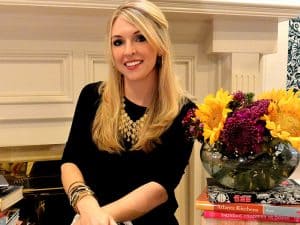

From stepping into adult responsibilities at just ten years old to building one of the fastest-growing creative brands of her generation, Julie Sousa’s story is one of resilience, reinvention, and radical self-belief. As the founder of The Avant Garde and a 2025 Forbes Top Creator, Julie has transformed her early experiences with immigration, scarcity, and self-reliance into a career rooted in accessible design and fearless creativity. Her journey is a powerful reminder that innovation often begins in the moments where survival and imagination meet.
We had the honor of connecting with Julie, and she opened up about the defining chapters that shaped her path; from leaving home at eighteen with nothing but determination, to the pivotal therapy session that pushed her to pivot from corporate life to full-time creation. She reflects on burnout, motherhood, entrepreneurship, and the internal shifts that allowed her to turn vulnerability into vision. Through candid stories of rock-bottom moments, creative breakthroughs, and the quiet certainty that she was meant for more, Julie reveals how she built not only her brand, but a new definition of success.
Julie also shares the mission behind The Avant Garde: blending high-end design with DIY accessibility to make creativity attainable for everyone.
Read our full interview with Julie below.
Julie Sousa, Founder of The Avant Garde

Taking on adult responsibilities at just ten years old while navigating immigration challenges is extraordinary. How did these early experiences shape your approach to entrepreneurship and building The Avant Garde?
Julie Sousa: Growing up, I had to become self-reliant at an early age. My parents split when I was ten, and as the oldest of 6 and an immigrant, I quickly learned that survival meant becoming resourceful. Those times taught me to solve problems with whatever was in front of me, and that mindset became the foundation of my creativity.
To me, entrepreneurship isn’t about hustle for the sake of it but about finding possibilities in constraints. That’s how I got to building my brand, though… believing that creativity is a survival skill, and that design (like life) is most powerful when it’s accessible.
You left home at eighteen with just a backpack and determination. What mindset shifts or strategies helped you transform that vulnerability into strength as you built your career?
Julie Sousa: I hit rock bottom. I realized that if I wanted to become someone or build anything meaningful, I had to learn the ropes on my own. It was a painful time. There were days I couldn’t afford a meal. I’d call my mom and ask if she had a few dollars so I could order from the McDonald’s dollar menu. She didn’t have much back then either. I remember her digging through her couch cushions, looking for enough coins so I could eat.
My dad did have the financial means at the time, but we weren’t speaking. I was young and stubborn and trying to prove something… to him and to myself. That’s part of why I struggled. I wanted to show I could do it without needing to be rescued… and because I wanted a different life for myself.
As hard as it was, that changed me. I was depressed and scared, but I was also oddly determined. I always had this quiet certainty that I was meant for more. I could see the life I wanted SO clearly, even if I wasn’t living it yet. Whatever the case, that vision kept me moving. I understood early that no one was going to build my life for me and that I had to become the version of myself I believed existed.
That mindset shaped my entire career, though, turning hardship into drive, vulnerability into resilience, and a lack of resources into creativity. It taught me to bet on myself before anyone else did.
Can you walk us through that pivotal therapy moment during the pandemic when you asked yourself, “What truly makes you happy?” How did you know it was time to completely pivot your career?
Julie Sousa: Even after getting my degree and landing an awesome corporate job, I still had this feeling that I was meant for more. I was giving everything I had to that job, taking on work outside my role, impressing everyone above me… and it still didn’t matter. It hit me pretty early that corporate isn’t just about talent. There’s politics, hierarchy, timing, and people who have a say in your growth who barely even know you.
That realization crushed me. I remember thinking, “Did I really jump through all these hoops just to wait another twenty years to build the life I want?” Kinda felt hopeless. I wanted more, I wanted to grow, and I wanted it FASTER.
So in the middle of the pandemic, I went to therapy. I told my therapist how stuck I felt, and she asked me something so simple: “What actually makes you happy?” And without even thinking, I told her…creating. Making things. Crafting. Designing. Then she looked at me and said, “If that’s what fills you up, why aren’t you doing it?” And I instantly went into all the excuses: the market is saturated, nobody needs another creator, it’s risky, it’s unstable… basically all the fear-based things you learn in school. She cut through all of it and asked me, ‘What do you have to lose by sharing what you love with the world?’
She was right. I was already unhappy. Creating was the one thing that actually made me feel like myself. So I started posting as a hobby, as an outlet, and somehow that outlet became my career. That session changed my life.
You’ve spoken about experiencing burnout before launching The Avant Garde. How do you now maintain boundaries between your creative passion and business demands, especially as a mother?
Julie Sousa: I didn’t actually understand what burnout was until I started this career. You don’t know what you don’t know. And the older I get, the more I realize how easily it can creep up on me. I have more skills now, more ideas, more drive… and with that comes this pressure I put on myself to be great at everything: being a mom, a wife, an entrepreneur, a friend. I’m naturally competitive, so I’m always trying to excel in every role I play, and honestly, it can get a bit mentally exhausting.
I’m learning as I go, though. I try to set work hours and create structure, but when you’re the one generating your own income (and you’re motivated by it), those boundaries can get blurry fast. What keeps me grounded is remembering my family. My dad worked a lot when I was growing up. He was a great dad, but as a single parent, he couldn’t always be mentally present. That memory stays with me. It reminds me that success means nothing if I’m not present with the people I love.
So now, maintaining boundaries isn’t just about avoiding burnout. It’s about choosing presence over perfection, and allowing myself to be human instead of trying to be the best at everything all the time.
Many ambitious women struggle with the “never enough” mentality. How do you define success for yourself now, and how has that definition evolved from your earlier career?
In my early career, success was very black-and-white. It meant climbing the ladder fast, getting the promotion, making more money, proving that I could outwork anyone. I was always chasing the next level. And honestly, that ‘never enough’ mentality followed me into influencing, too: the numbers, the growth, the pressure to top your last viral video.
But becoming a mom and building my business at the same time shifted things for me. I still value ambition, I’m competitive by nature, but I no longer see success as this linear climb. Now it looks more balanced. It looks like being proud of the work I put into the world without losing myself in the process. It looks like having time with my son, having mental space, and feeling connected to my life, rather than constantly running through it.
So now, success isn’t just external achievements. It’s feeling grounded, being present, creating things I’m genuinely proud of, and growing in a way that feels sustainable. It’s being able to look at my life and say, “this feels like me” instead of constantly chasing the next version of myself.
Your platform blends high-end design with DIY accessibility. How do you balance the pressure to constantly create aspirational content with staying authentic to your values?
Julie Sousa: I’ve always lived in that space between high-end design and DIY accessibility, and I think that’s what makes my platform unique. There’s definitely pressure to create content that feels aspirational and elevated, but I never want to lose the heart of what I do: showing people that creativity doesn’t require a huge budget.
What keeps me grounded is remembering where I came from. I grew up making something out of nothing, and that resourcefulness is still the core of my brand. I love beautiful and luxurious design, but I’m also the girl who will grab cardboard, pool noodles, paint, whatever I have, and turn it into something cool. That balance is what feels authentic to me.
So instead of choosing between aspirational and accessible, I merge the two. My goal is to create content that inspires people while also reminding them they can do it too. The pressure will always be there, but as long as I stay rooted in that mix of creativity, resourcefulness, and real life, I know I’m staying true to my values.
The design and home improvement industry can be competitive and sometimes exclusive. What strategies have you used to establish credibility and build your personal brand in this space?
Julie Sousa: When I first started, education was booming on TikTok. I wasn’t afraid to teach myself design principles and put it on blast for my audience. At the time, no one in the industry was doing that, especially not the professionals. Their knowledge lived behind a paywall. I think that gave me an edge early on, though. I made design feel accessible when the space still felt gatekept.
When that market got saturated, the DIY era took over. And a lot of the content started to look the same. Around that time, I had begun traveling more and found myself inspired by the design I saw in other countries. I became obsessed with how different cultures used lighting, texture, and small details to transform a space.
So instead of trying to out-DIY everyone, I started experimenting. I brought small pieces of what I learned abroad into my projects at home. I played with lighting in ways I hadn’t seen much on TikTok yet. I tried mixing simplicity with design elements that felt a bit more global or intentional.
I’ve always had a good grasp on my generation and the one below it. While people my age were doing very traditional DIYs, I was making things Gen Z wanted to see, but explaining them in a way millennials wanted to hear. That blend…high-end taste, real process, and content that bridges two generations… is what helped me stand out and build credibility in such a competitive space.
Forbes named The Avant Garde to their 2025 Top Creators list. How are you leveraging this recognition to open doors while staying true to your mission of making design accessible?
Julie Sousa: Being named to the Forbes list was surreal, but it didn’t change my mission. If anything, it amplified why I do what I do. I want people to see someone like me (an immigrant who grew up stretching her dollars) and realize that creativity doesn’t belong only to successful people.
This recognition helps me get into the rooms where decisions get made. It opens doors with brands, it expands my platform, and it gives me more leverage. But I’m using that access to keep pushing the narrative that design can still be affordable and approachable. I’m not here to become some out-of-reach luxury creator. I want to grow up without growing away from the people who connect with my content: it’s the balance I’m committed to!

You are part of a new generation of creators redefining success through authenticity rather than virality. What advice would you give to women building businesses who feel pressured to follow traditional metrics?
Julie Sousa: I’m going to be honest… I love numbers. Virality motivates me. I’m competitive, I’m analytical, and I study my metrics because they tell me what’s working. I don’t think women should shy away from that. Strategy isn’t just a ‘guy thing.’ Women can be incredibly data-driven, too.
The pressure comes when you treat numbers as the whole story. It matters. but it’s definitely not the only marker of success. What really builds a business is consistency, creativity, and understanding your audience.
So my advice is: don’t be afraid of your analytics. Don’t buy into the idea that paying attention to performance makes you less creative. Use the data to sharpen your work, and stay focused on the projects that light you up. If you can combine the numbers with your skill set and your point of view, you’ll build something real and sustainable… with or without virality.
Your story touches on reinventing yourself multiple times. For women who feel stuck in careers that no longer serve them, what would you tell them about the courage required to start over?
Julie Sousa: Starting over is terrifying because you’re letting go of the version of you that feels familiar, even if you’re unhappy. But every reinvention in my life came from choosing discomfort over regret. No matter how many panic attacks it triggered (currently feeling like I’m in one as I buy a new home tbh)
But at the end of the day, you don’t need the whole plan! You just need the first step. My therapist once asked me, “What do you have to lose by sharing what you love with the world?” And that question changed my life.
We don’t need certainty to begin. We just need honesty about what’s no longer working…and enough courage to move an inch in the direction of what feels right.
Your Alice in Wonderland installation and other projects show incredible imagination. How do you balance client expectations with pushing creative boundaries in your work?
Julie Sousa: I don’t take on client projects anymore. I used to, and I loved the creativity of it, but once my platform grew, I realized there was a huge difference between the two industries in terms of earnings. My time is limited, and as a mom and wife, I have to manage my hours in the day and make smart business decisions.
Shifting fully into influencing allowed me to be more efficient, make a bigger impact, and still create the design-forward experiences I love… but in a way that works better for my family and my career. I still push my creative boundaries, but now I do it through partnerships and personal projects rather than traditional client work.
For women who feel disconnected from their creative side due to career demands, what practical steps would you recommend to reconnect with that part of themselves?
Julie Sousa: I really feel this. When I was in corporate, I missed creativity so much. I’d spend all day running VLOOKUPs, crunching numbers, thinking strategically… and the only part that genuinely lit me up was making the PowerPoint look aesthetic. That was my little outlet.
I think the key is finding tiny pockets in your day to do something that feels like you. It doesn’t have to be a full-blown project. It can be making a prettier presentation, trying a new recipe when you get home, rearranging a corner of your space, or doing something small with your hands.
Creativity doesn’t need hours — it just needs a window. And the more you give yourself those tiny windows, the easier it becomes to reconnect to that part of yourself. Eventually, those moments add up, and you start remembering what actually makes you feel alive.
Lastly, is there a specific mantra, quote, or affirmation that you hold close to your heart?
Julie Sousa: A quote I always come back to is the one about the definition of insanity being ‘doing the same thing over and over again and expecting different results.’ (Einstein) It’s simple, but it’s guided so many of my decisions.
Anytime I feel stuck, burnt out, or unhappy, I remind myself that I can’t keep repeating the same patterns and expect my life to magically change. It pushes me to pivot, to take risks, to reinvent myself when something no longer feels aligned. That mindset is honestly what led me to leave corporate, start creating, and build the life I have now.

Emily Sprinkle, also known as Emma Loggins, is a designer, marketer, blogger, and speaker. She is the Editor-In-Chief for Women's Business Daily where she pulls from her experience as the CEO and Director of Strategy for Excite Creative Studios, where she specializes in web development, UI/UX design, social media marketing, and overall strategy for her clients.
Emily has also written for CNN, Autotrader, The Guardian, and is also the Editor-In-Chief for the geek lifestyle site FanBolt.com